The independent appliance repair shop across the Southeast
Freezer Repair — Book a Visit Today
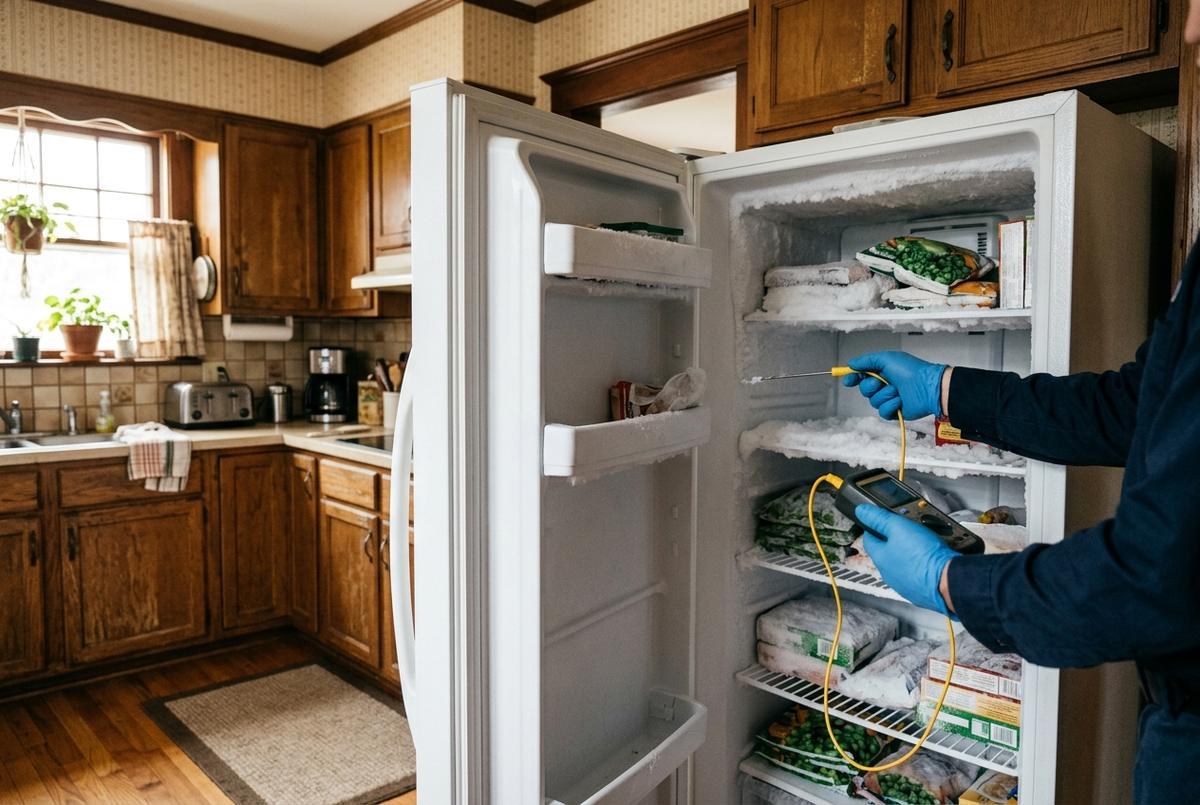
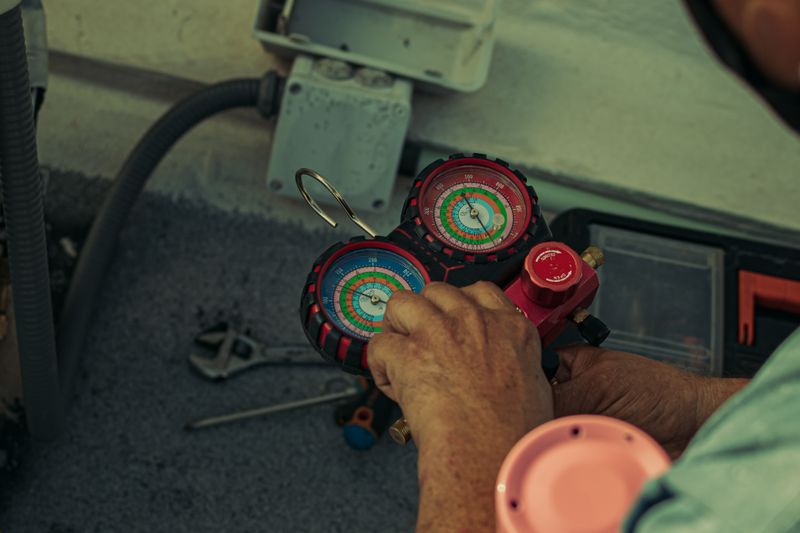
We repair freezers that quit cooling, frost over, or run without holding temperature, and if your food is at risk right now, call us and tell us what you hear and what you see. A freezer fails quietly, so nobody notices until the ice cream is soup and the chicken smells wrong. Most of what we find comes down to a handful of parts: a sealed-system leak, a dead evaporator fan, a defrost heater or thermostat that quit, a compressor relay that clicks and gives up, or a door gasket that stopped sealing years ago. Our technicians start with temperatures and airflow, then work back to the cause instead of swapping parts and hoping. Chest, upright, garage units, and the freezer half of a side-by-side. We work on all major brands as an independent shop.
Call (888) 826-9217- You reach a person, not a menu
- Open every day
- The quote comes first, in writing
Taking calls until 5:00 PM CT
The freezer symptoms we hear most
- Freezer is running but everything is thawing Usually a sealed-system refrigerant loss, a stuck compressor relay, or condenser coils packed with dust and pet hair.
- Thick frost building up on the back wall That pattern points at the defrost system (heater, thermostat, or timer), or a door gasket letting humid air in.
- Loud buzzing or clicking every few minutes A compressor trying to start and failing usually means a bad start relay or overload protector.
- Sour or chemical smell inside Spoiled food residue in the drain path is the common cause, though a burnt smell near the back needs immediate attention.
- Ice cream soft but the display says zero A drifting thermistor or a control board reading the wrong sensor makes the freezer think it is colder than it is.
Safe things to check first
Worth a look before you call — sometimes it saves you the visit.
- 1Make sure the door actually latches. A jar of pickles pushing a shelf forward will hold it open a hair.
- 2Slide the unit out and look at the coils underneath or behind; heavy lint blocks heat and starves cooling.
- 3Put a cup of water in the freezer with a thermometer in it and check the reading after a few hours, since air temps swing.
- 4Confirm the outlet has power by plugging in a lamp, and check that the breaker or GFCI has not tripped.
Why homeowners pick a local independent shop
| ACR Service Inc | Big-box repair chains | Handyman listings | |
|---|---|---|---|
| Quote in writing before a wrench comes out | ✓ | ✕ | ✕ |
| Phones answered by people, every day | ✓ | ✕ | ✓ |
| All major brands, gas and electric | ✓ | ✓ | ✕ |
| Independent, no manufacturer quotas | ✓ | ✕ | ✓ |
| Crews familiar with homes like yours | ✓ | ✕ | ✓ |
What homeowners say after the visit
“The dryer vent was packed solid. Airflow now is night and day, and towels dry in one cycle.”
Joyce E.Louisville, KY“He quoted the repair, then told me honestly the control board might follow within a year. I repaired anyway, eyes open.”
Alan W.New Orleans, LA“Booked online at night, callback the next morning. Smooth from start to finish.”
Tricia S.Meads, KYFreezer Repair — quick answers
How long can I leave food in a freezer that stopped working?
A full, closed freezer holds safe temperatures roughly 48 hours. A half-full one about 24. Keep the door shut. If you can move food to a neighbor's freezer or pack it with dry ice, do that first.
Is it worth repairing a freezer or should I replace it?
Depends on the failure. Fans, thermostats, heaters, gaskets, and relays are routine repairs. A dead compressor or a leak in a foamed-in line is a bigger conversation. Our technician will tell you straight which one you have.
Do you work on chest freezers and garage units?
Yes. Chest freezers, uprights, standalone garage models, and the freezer section of side-by-side and French door refrigerators. Garage units get extra scrutiny because ambient heat and humidity change how they behave.
Why does frost keep coming back after I defrost it manually?
Manual defrosting clears the symptom, not the cause. Something is either adding moisture, like a failing gasket or a door left ajar, or the automatic defrost cycle is not running at all. Both need diagnosis.
Can you fix a refrigerant leak?
Sometimes. Accessible lines and joints can be repaired and recharged. Leaks inside foam insulation or in the evaporator buried in the cabinet wall are often impractical. We locate the leak before recommending anything.
How do I get ready for the technician's visit?
Clear a path to the unit and space behind it if possible. Note when the trouble started and any sounds you heard. If there is standing water or heavy frost, leave it. That tells us something.
How it works
- Step 1
Tell us the symptom
Call us or fill out the form. Describe what the appliance does and does not do. Noises, error codes, smells, puddles. Brand and model help. That detail lets us plan the visit right.
- Step 2
We diagnose in person
A technician comes to your kitchen or laundry room and tests the machine instead of guessing. Controls, heating parts, motors, seals, drains. You hear what failed and what the repair involves before work starts.
- Step 3
You approve the repair
Nothing gets replaced until you say go. Common parts are handled on site when we have them. If a part must be ordered, we tell you that up front and schedule the return.
- A real person answers
- Open 7 days
- Written quote before work starts
Why homeowners call us
- Symptoms, not scriptsA washer that fills but never spins is a different problem than one that spins but never drains. We ask questions that narrow it down, then confirm with testing. Guesswork wastes parts and your afternoon.
- Independent and brand-wideWe are not tied to any manufacturer. That means we work on the big laundry and kitchen names side by side, and we recommend the repair that makes sense for your machine, not one brand's playbook.
- Regional coverageBased in Huntsville, we serve homeowners in Alabama, Georgia, Tennessee, Kentucky, Mississippi, Louisiana, Arkansas, North Carolina and South Carolina. One number to call whether you are in a city neighborhood or a small town outside it.
- Straight explanationsYou will hear what part failed and why, in plain words. If a machine is worn past sensible repair, we say so. Homeowners make better decisions when nobody is hiding behind jargon.
- All major brands, gas & electricIndependent service on Whirlpool, LG, Samsung, GE, Maytag, Bosch, KitchenAid and the rest.
- Straight answersSome machines aren't worth the part, and we say so before you spend anything.
Freezer Repair
Small faults become big ones on a schedule of their own
Describe the symptoms and we'll book the visit — takes about a minute.
- A real person answers
- Open 7 days
- Written quotes
- All major brands
- Gas & electric
Rather not call? Get a free quote →