The independent appliance repair shop across the Southeast
Dishwasher Repair — Book a Visit Today
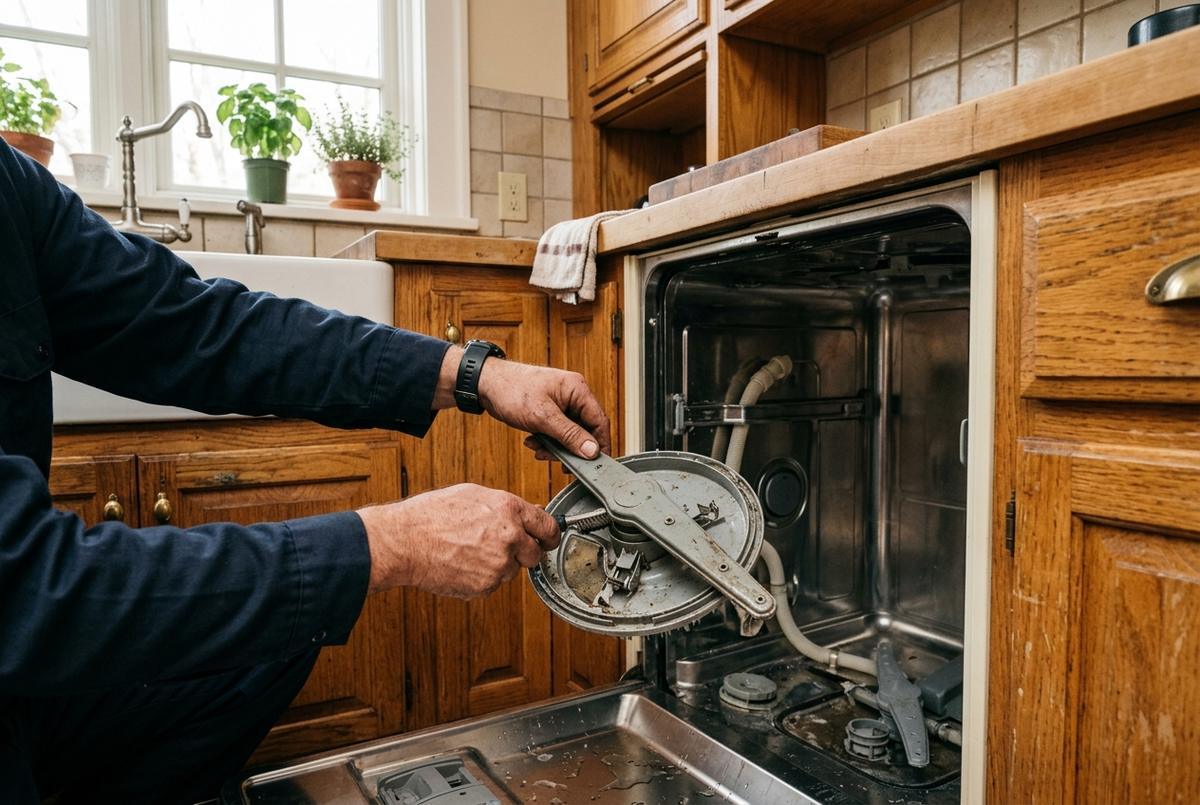
We repair dishwashers that won't drain, won't start, leak, or leave dishes dirty, and we work on all major brands as an independent shop. Most of the trouble sits under the tub where you can't see it. Water comes in through a fill valve, a circulation pump pushes it around, and a drain pump sends it out. Any one of those can quit without warning. Then there are door latches, heating elements, control boards, spray arm bearings, and a float switch that decides the tub is full when it isn't. Our technicians start with what the machine is doing right now: the sound it makes, where in the cycle it stops, whether the water ever left the tub. We test the suspect circuit instead of guessing and explain the failed part in plain words. Tell us the symptom and we'll book a visit.
Call (888) 826-9217- You reach a person, not a menu
- Open every day
- The quote comes first, in writing
Taking calls until 5:00 PM CT
The dishwasher symptoms we hear most
- "There's still water sitting in the bottom" Standing water usually means a blocked drain hose, a clogged filter or sump, or a drain pump that hums without moving water.
- "Dishes come out gritty and wet" Weak wash action comes from a tired circulation pump, plugged spray arm holes, or a heating element that never dries the load.
- "It beeps and flashes instead of starting" Blinking lights and error codes usually trace back to the door latch switch, a leak sensor, or a control board that lost a signal.
- "Water is creeping out under the door" Leaks start at the door gasket, a cracked tub seal, a loose hose clamp, or too much suds from the wrong detergent.
- "It smells like a swamp when I open it" Odor means old food is trapped somewhere, usually the filter, sump, or drain hose loop. Sometimes a drain line backfeeds from the disposal.
Safe things to check first
Worth a look before you call — sometimes it saves you the visit.
- 1Pull the bottom rack and lift out the cylinder filter to see if it's packed with food, glass chips, or a fruit sticker.
- 2Spin both spray arms by hand and check that the little holes aren't crusted shut with mineral scale.
- 3Make sure the door latches all the way. Many machines refuse to run if a tall pan or a handle is blocking the door.
- 4Check the breaker, and if your unit plugs in under the sink, confirm the cord is seated and the outlet has power.
Why homeowners pick a local independent shop
| ACR Service Inc | Big-box repair chains | Handyman listings | |
|---|---|---|---|
| Quote in writing before a wrench comes out | ✓ | ✕ | ✕ |
| Phones answered by people, every day | ✓ | ✕ | ✓ |
| All major brands, gas and electric | ✓ | ✓ | ✕ |
| Independent, no manufacturer quotas | ✓ | ✕ | ✓ |
| Crews familiar with homes like yours | ✓ | ✕ | ✓ |
What homeowners say after the visit
“Called at 8, booked by 8:15, fridge cold before dinner. I did not expect that speed.”
Angela P.Louisville, KY“He explained every step before touching a screw. Quote on paper first, then the work.”
Luis G.New Orleans, LA“Our oven was running forty degrees cold for months. One sensor later, cookies come out right again.”
Renee W.Meads, KYDishwasher Repair — quick answers
Is a dishwasher that won't drain worth repairing?
Often yes. Drain problems are usually a clog or a failed drain pump, and both are contained repairs. Our technician checks the hose, sump, and pump before recommending anything. If the tub or wiring is badly corroded, we'll say so plainly.
Why do my dishes stay wet at the end?
Most dishwashers dry with a heating element or a condensation cycle. A burned-out element, a failed thermostat, or skipped rinse aid will all leave a load damp. We test the element and its circuit to find out which.
What does the error code on my display mean?
Codes differ by brand, but they generally flag a category: fill trouble, drain trouble, heat trouble, or a sensor reading out of range. Read us the code when you call us so we bring likely parts on the first trip.
Can hard water damage a dishwasher?
It won't destroy the machine, but scale builds up on the element, the spray arm holes, and the seals. Over time that means poor rinsing and stuck valves. Descaling now and then, plus rinse aid, slows it down considerably.
Do you work on built-in and drawer models?
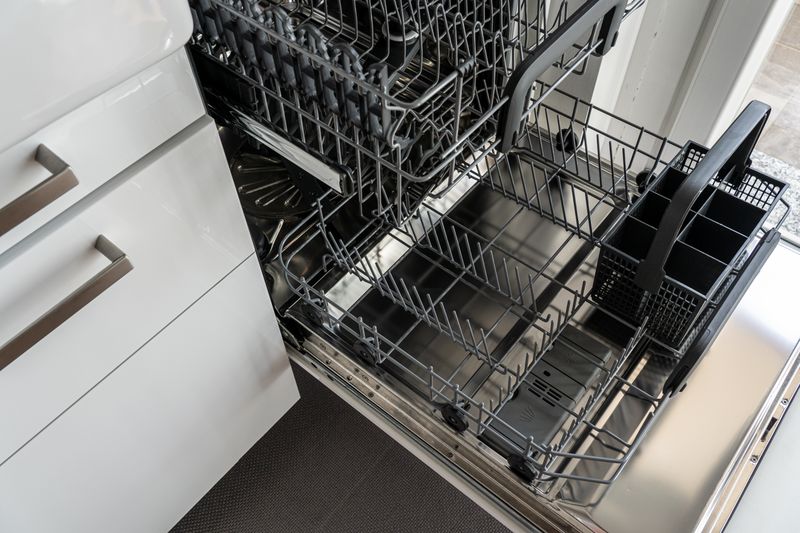
Yes. Standard built-ins, compact units, and drawer-style dishwashers all come through our schedule. Drawer models have their own seal and rail quirks, so mention the style when you book and we'll plan for the pull-out.
Should I keep running it if it leaks a little?
No. Stop using it and shut off the supply valve under the sink. Small leaks soak subfloor and cabinet bases fast, and water near the control board turns a simple gasket job into a much bigger one.
How it works
- Step 1
Tell us the symptom
Call us or fill out the form. Describe what the appliance does and does not do. Noises, error codes, smells, puddles. Brand and model help. That detail lets us plan the visit right.
- Step 2
We diagnose in person
A technician comes to your kitchen or laundry room and tests the machine instead of guessing. Controls, heating parts, motors, seals, drains. You hear what failed and what the repair involves before work starts.
- Step 3
You approve the repair
Nothing gets replaced until you say go. Common parts are handled on site when we have them. If a part must be ordered, we tell you that up front and schedule the return.
- A real person answers
- Open 7 days
- Written quote before work starts
Why homeowners call us
- Symptoms, not scriptsA washer that fills but never spins is a different problem than one that spins but never drains. We ask questions that narrow it down, then confirm with testing. Guesswork wastes parts and your afternoon.
- Independent and brand-wideWe are not tied to any manufacturer. That means we work on the big laundry and kitchen names side by side, and we recommend the repair that makes sense for your machine, not one brand's playbook.
- Regional coverageBased in Huntsville, we serve homeowners in Alabama, Georgia, Tennessee, Kentucky, Mississippi, Louisiana, Arkansas, North Carolina and South Carolina. One number to call whether you are in a city neighborhood or a small town outside it.
- Straight explanationsYou will hear what part failed and why, in plain words. If a machine is worn past sensible repair, we say so. Homeowners make better decisions when nobody is hiding behind jargon.
- All major brands, gas & electricIndependent service on Whirlpool, LG, Samsung, GE, Maytag, Bosch, KitchenAid and the rest.
- Straight answersSome machines aren't worth the part, and we say so before you spend anything.
Dishwasher Repair
Small faults become big ones on a schedule of their own
Describe the symptoms and we'll book the visit — takes about a minute.
- A real person answers
- Open 7 days
- Written quotes
- All major brands
- Gas & electric
Rather not call? Get a free quote →